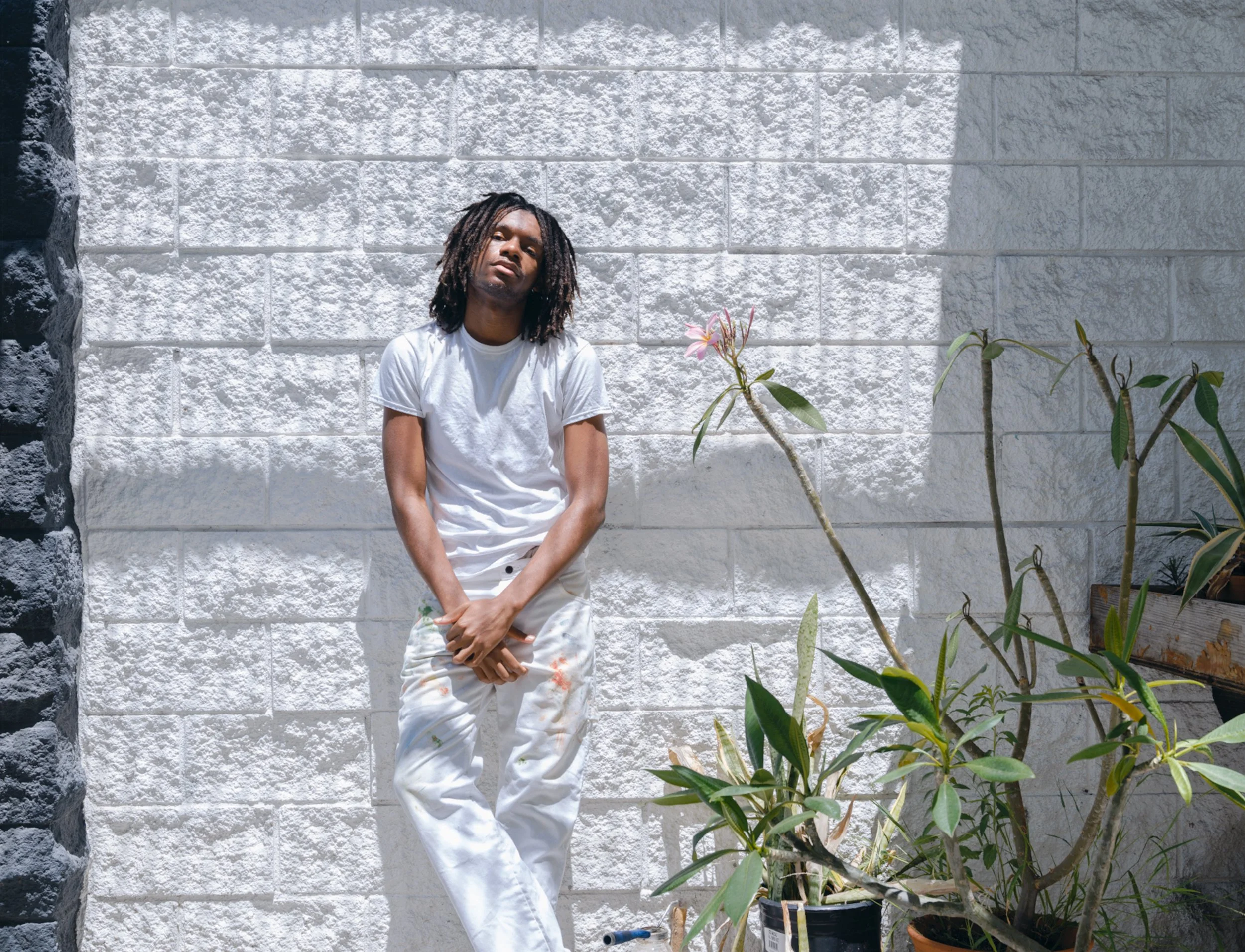
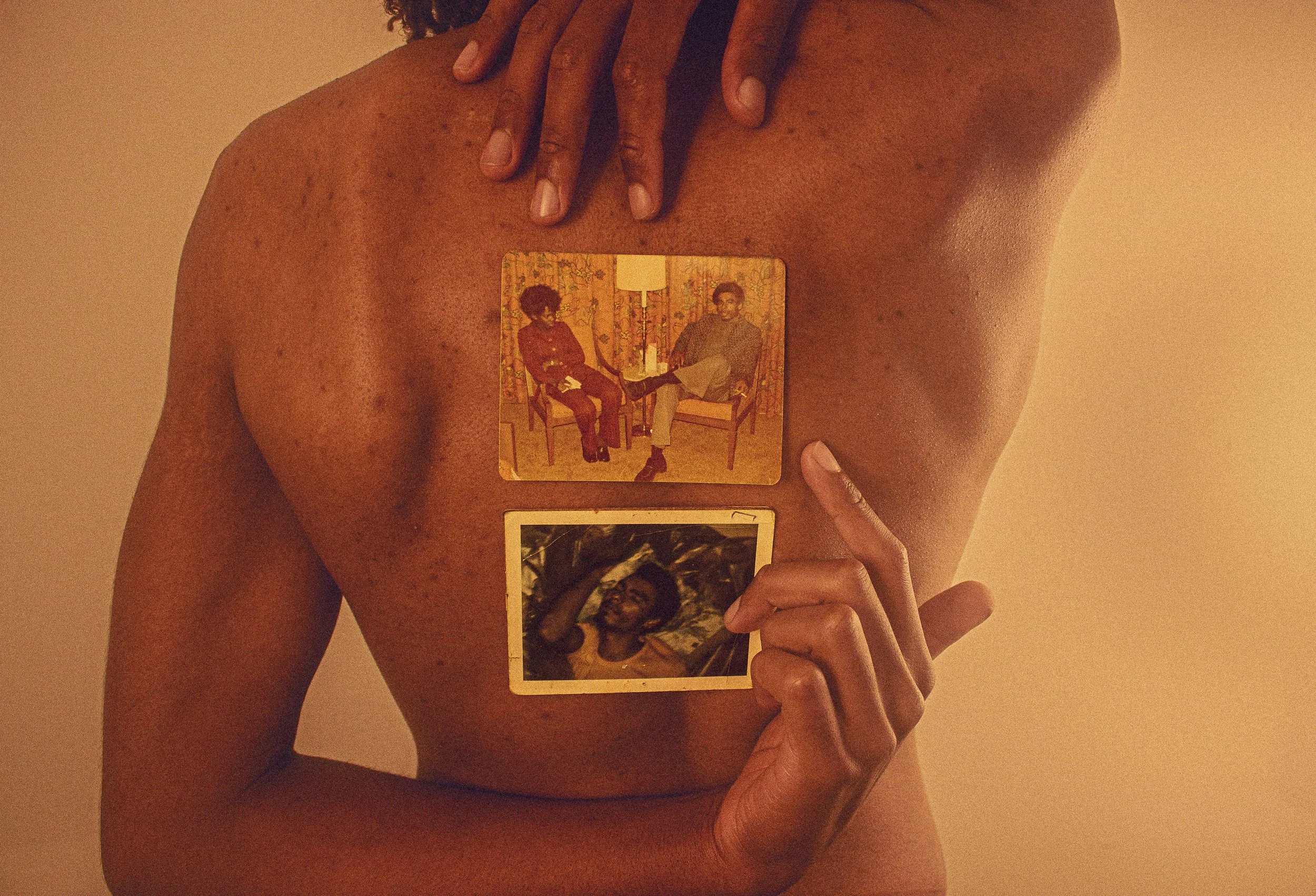
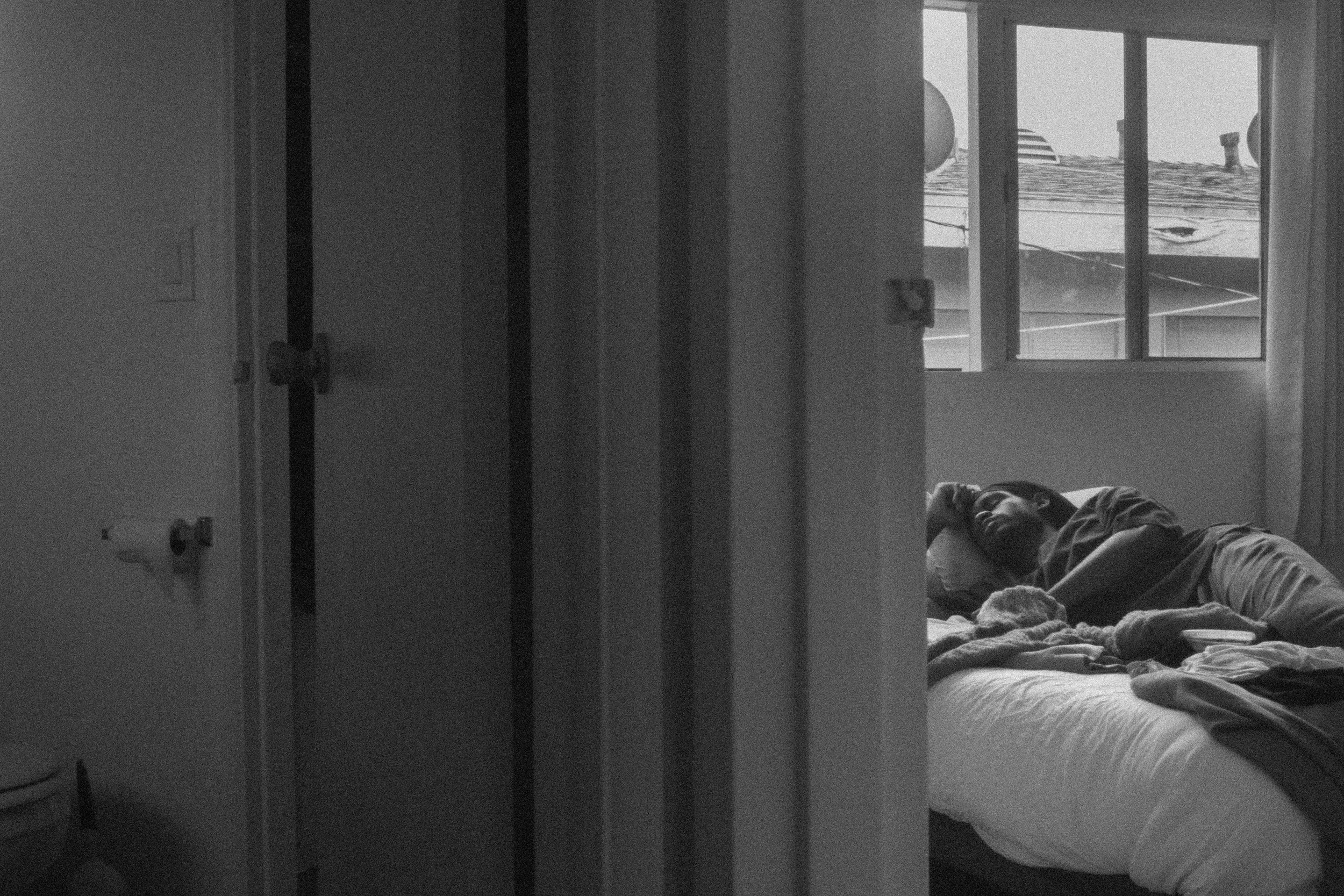
Juniper Jones treats the archive as a tactile medium, using stains, alterations, and abstraction to challenge how history is recorded. By centering Black family archives and domestic life, Jones transforms these spaces into sites of knowledge production where memory is continually embodied and remade.
Selected works
-
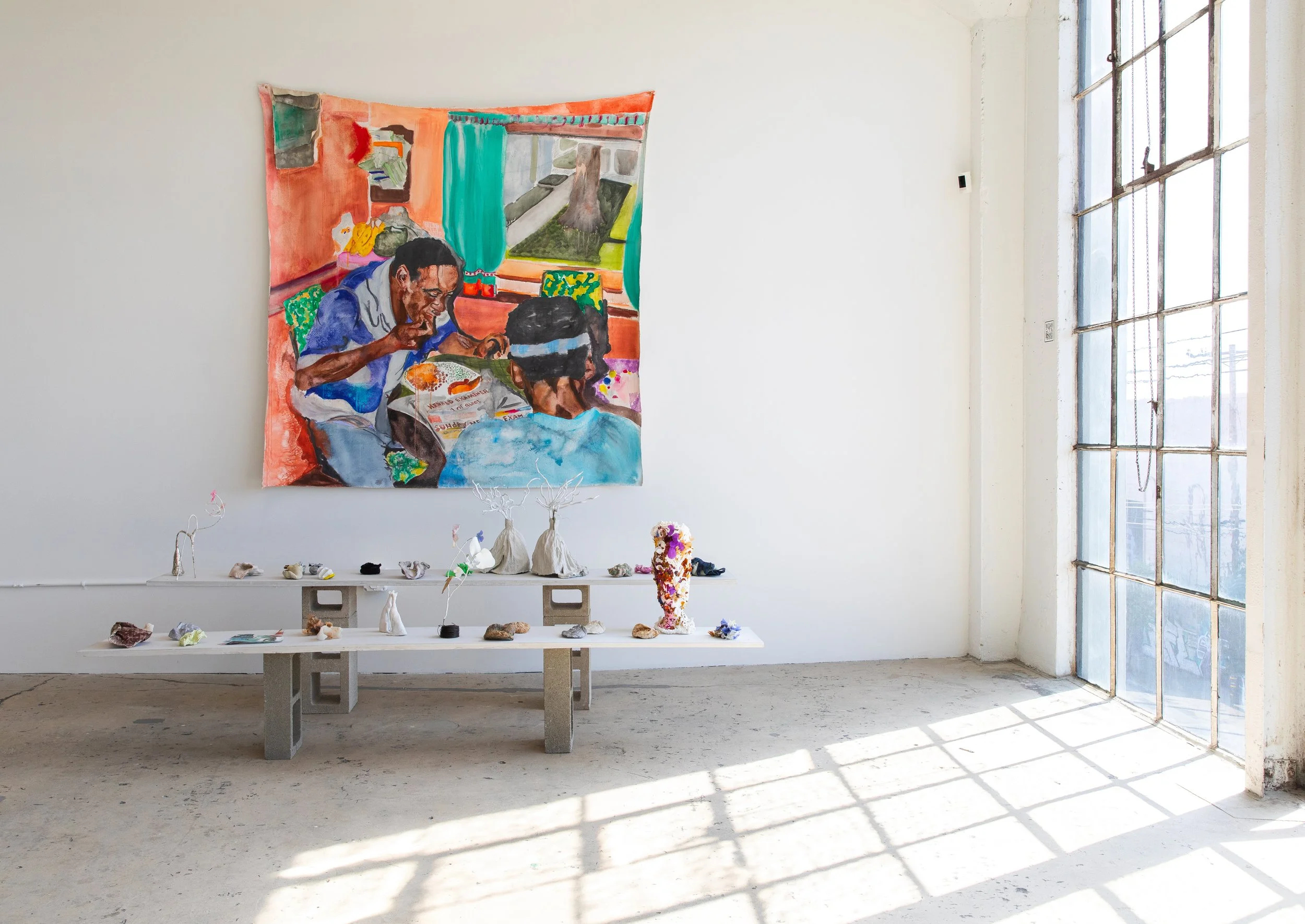
![An installation image from the Seven Stains from Sunday series.]()
Seven Stains from Sunday
2024
-
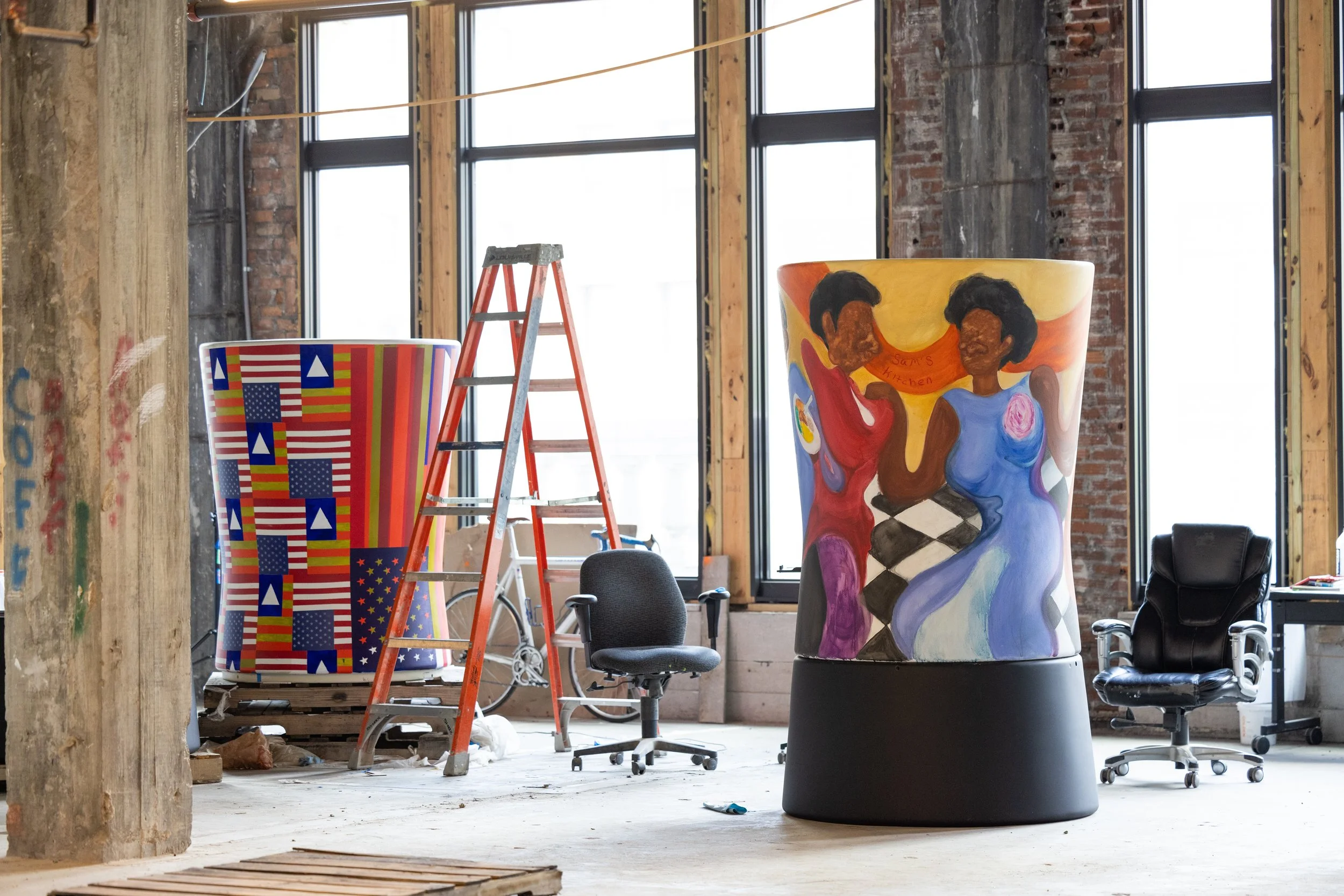
![A studio image of Juniper's drum for the Stories of Us Sculpture Project.]()
Stories of Us Sculpture Project
2024
-
![I heard a sigh from Take me to the Water Series]()
Take Me to the Water
2023
-
![An image from the Saccharine series.]()
Saccharine
2023
-
![An image from the Restless series.]()
Restless
2023
-
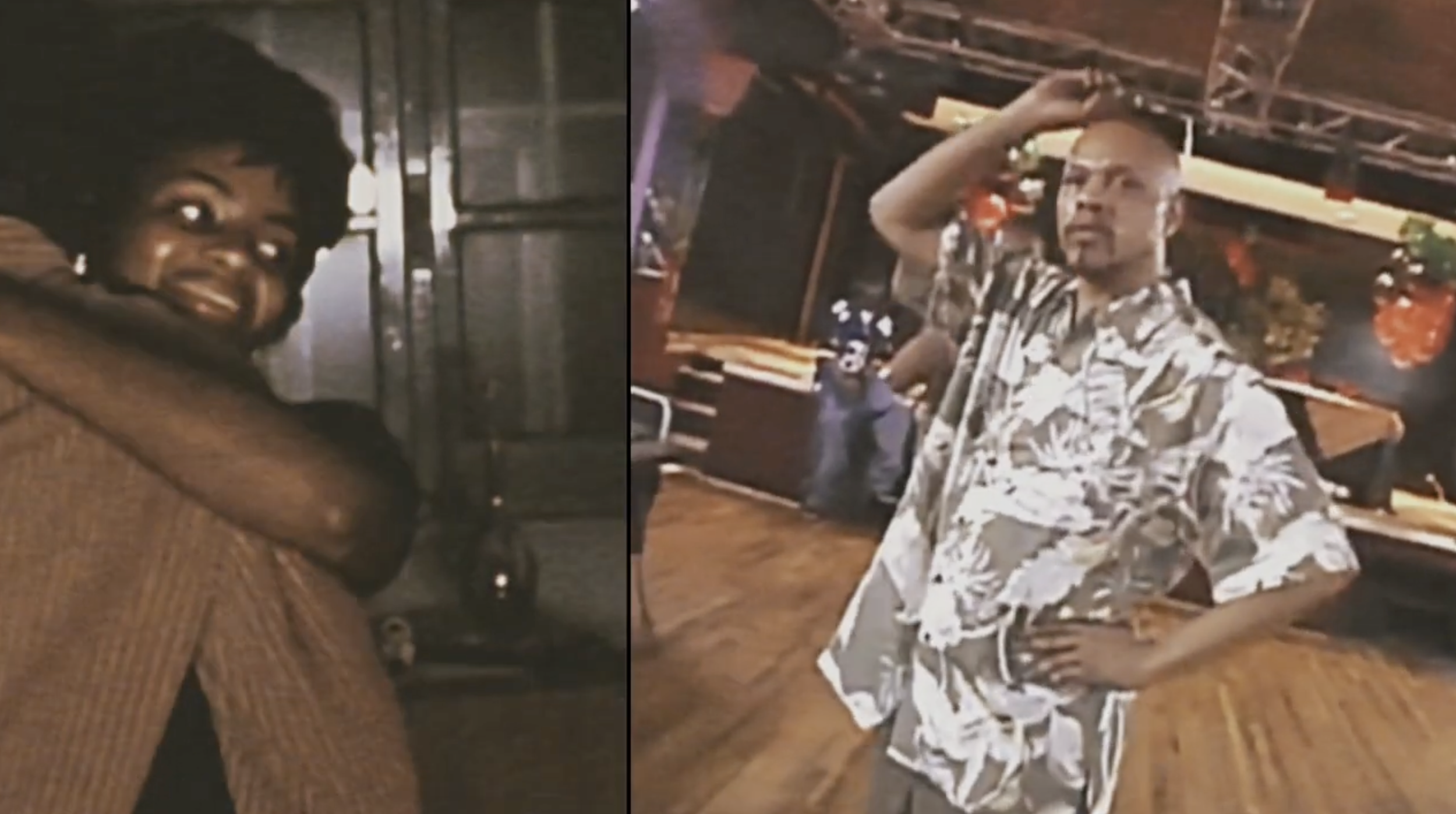
![A thumbnail of the short film, Searching__.]()
Searching__
2024
-
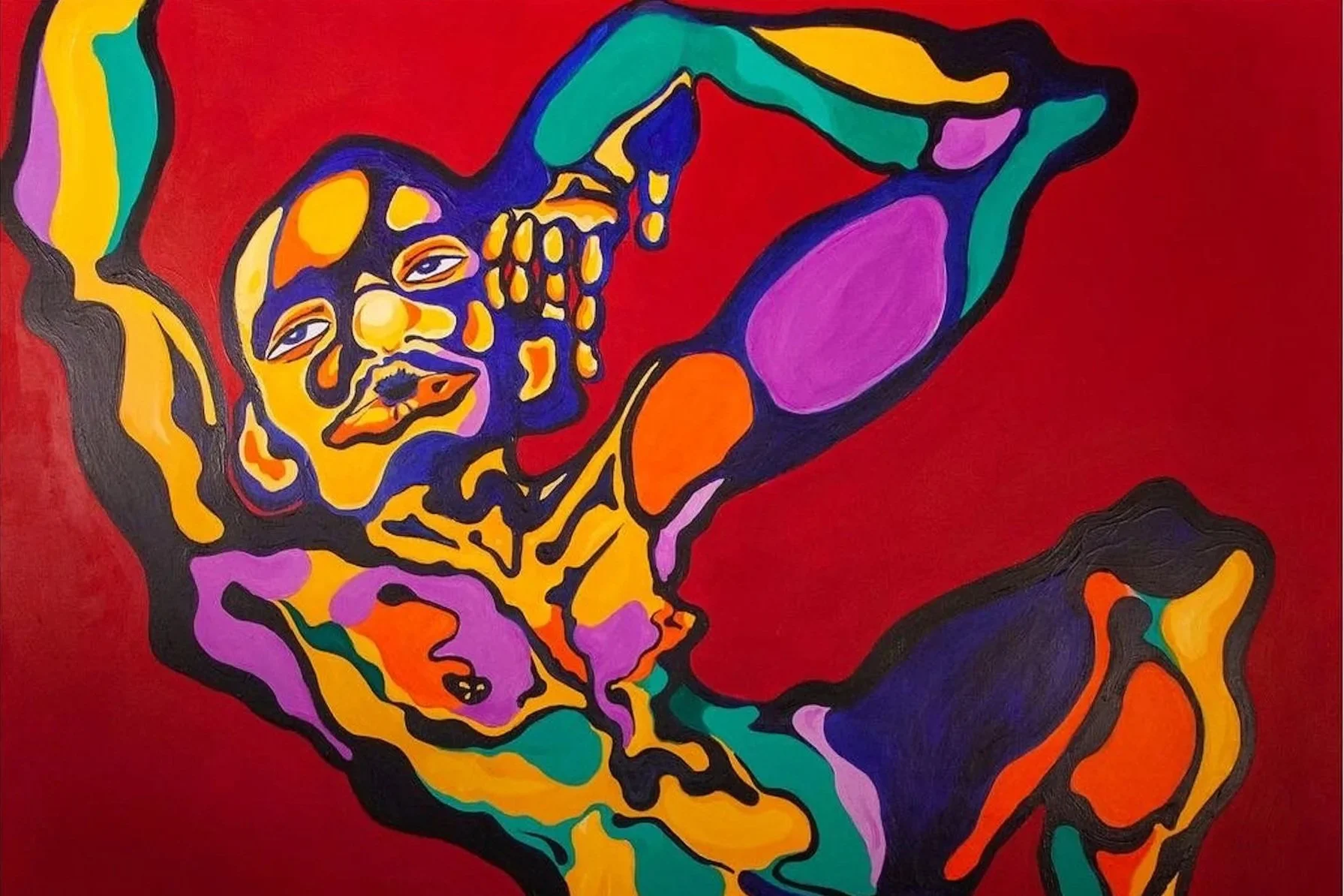
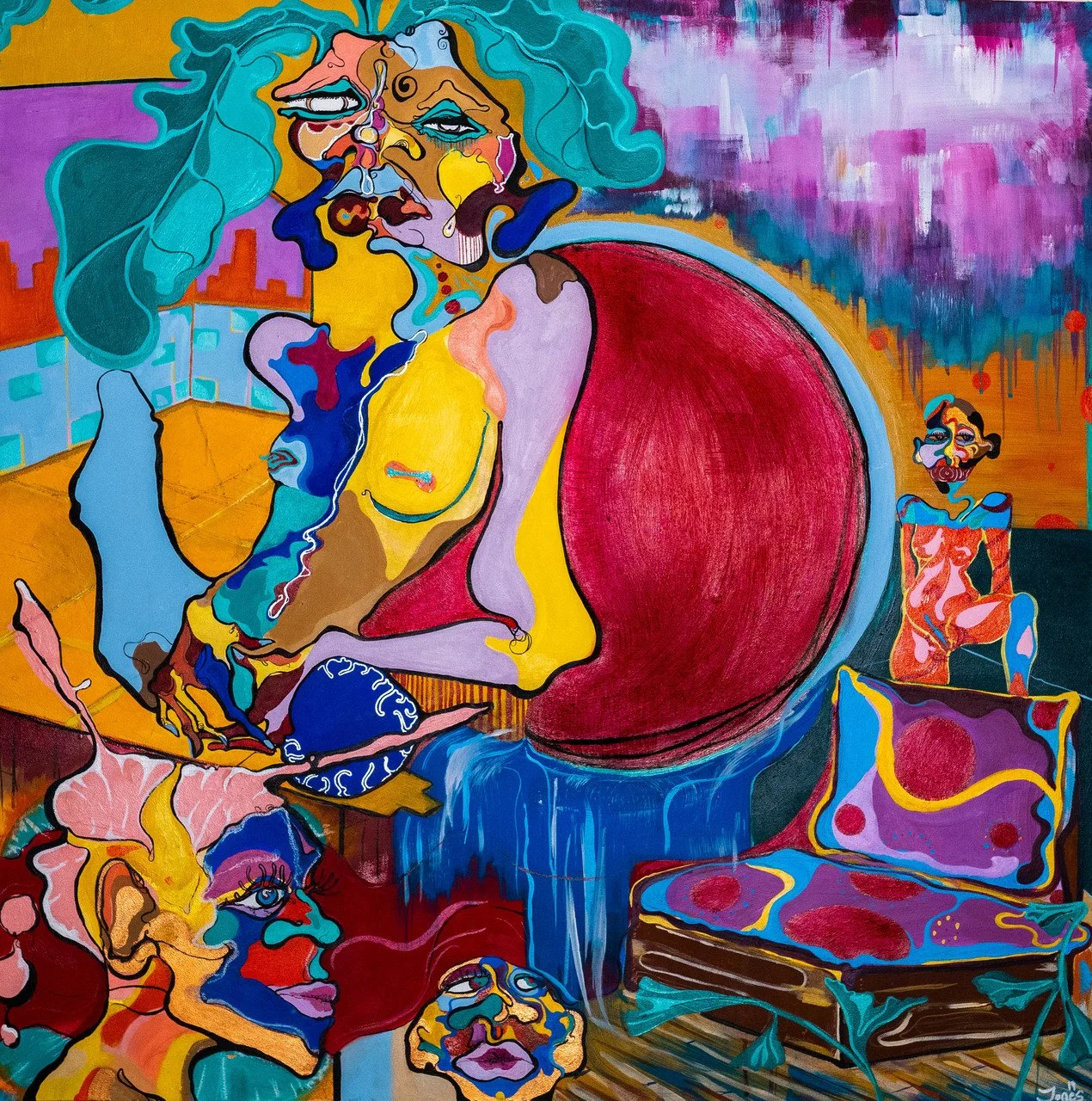
![Problem Is We_re All Fluid piece painting]()
Older works
2017 - 2019

About
“I color myself in with stains because… something had to be spilled—shared, spared, and labored over—in order for me to retain a working image of myself.” — Juniper Jones
Juniper Jones (b. 1997, Detroit, Michigan) explores domestic artifacts as vestiges of Black collectivity and ancestral record-keeping. Sourcing inspiration from autotheory, familial archives, and folkloric retellings, Jones’s practice spans painting, sculpture, performance, poetry, and installation.
Motivated by connecting traces of Black convening to matters of the domestic, Jones’s methodology investigates the stain through processes of pressing, imprinting, and soaking. Using handmade ironing boards, sad irons, and cast-iron skillets, they pair water-soluble media with corrosive elements like salt and bleach—alongside grease, dyes, and heat—to embed residue directly into textiles and wool fibers.
A central aspect of their practice reframes the "stain" as both an imperfect artifact of presence and a fugitive symbol resisting institutional erasure. This, in turn, allows Jones to reorient sites of Black labor and nightlife—from domestic kitchens to cabarets—as spaces that alchemize material stains, spills, and traces into language.